

This post was originally published on this site.
H&M Group’s latest financial report for the first half of the year, from 1 December 2025 to 31 May 2026, showed higher profits even as revenue contracted, reflecting a shift towards margin discipline over volume growth.
Key points:
- Operating profit excluding one-time costs rose 14% year on year to SEK 8.1bn (£631 million) in the first half of the year to 31 May.
- Net sales fell to SEK 104.4 billion, down 1% in local currencies, as the retailer ran tighter inventory and a smaller store base.
- Q2 (1 March to 31 May 2026) operating profit excluding one-time costs reached SEK 6.6 billion, though the result missed analyst estimates.
The Swedish fashion firm, which operates around 4,000 stores globally, 182 of which are located in the UK, said operating profit excluding one-time costs rose 14% to SEK 8.1 billion in the six months to 31 May 2026.
Net sales for the same period fell to SEK 104.4 billion, down 1% in local currencies.
Leaner inventory, fewer stores
The sales decline reflects two deliberate operational choices the retailer made: tighter inventory management and store-portfolio optimisation.
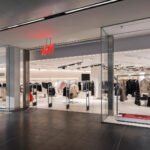
H&M operated around 3% fewer stores in Q2 than a year earlier, continuing a multi-year effort to close underperforming locations while investing in remaining sites and online channels.
Less stock in the system meant fewer markdowns, supporting profitability even where sales volumes softened.
The company’s gross margin benefited from a higher share of full-price sales, a pattern consistent with its stated strategy of reducing overbuying and improving stock turn.
Q2 detail
For Q2 alone, H&M reported operating profit of SEK 6.6 billion excluding one-time costs, with sales in local currencies broadly flat year on year.
CEO Daniel Ervér said in the company’s six-month report that the results reflected “continued progress in our transformation”, adding that H&M was focused on building a “more relevant and profitable company”.
He added that while sales in the quarter were “somewhat lower than planned”, profitability and the stock-in-trade situation “developed well”, and shared confidence in the group’s long-term work to “lay the foundations for sustainable and profitable growth”.
He also highlighted that tighter inventory management had, in some cases, affected the retailer’s “ability to fully meet demand”, adding that there was room to better forecast demand and stock availability.
Overall, he noted that organisational complexity had been reduced to move “decisions closer to the customer”, enabling more local relevance and allowing the company to meet local needs faster.
This move will be supported by investment in its digital infrastructure to better support decision-making and greater precision in stock management.
Yanmei Tang, analyst at Third Bridge, commented on the results: “H&M may not be winning the race on speed to market, but it is in a much stronger position on profitability, inventory discipline and supply chain resilience than it was a few years ago. Bringing production closer to key European markets should improve flexibility.”
“H&M is much better prepared for disruption than it was a few years ago. Lower inventory levels, improved supply chain planning, RFID technology and more data-driven buying decisions have helped improve stock productivity. As a result, our experts expect inventory to remain stable or gradually decline, reducing the risk of excess stock and heavy markdowns if demand remains weak.”
While H&M continues to prioritise inventory reduction, it is continuing its limited-edition designer collaborations, recently announcing a capsule collection with the New York-based minimalist luxury house WARDROBE.NYC, due to launch in August.
It was also one of 68 fashion and textile organisations to sign a statement urging governments to fix the economics of resale and repair.