

This post was originally published on this site.
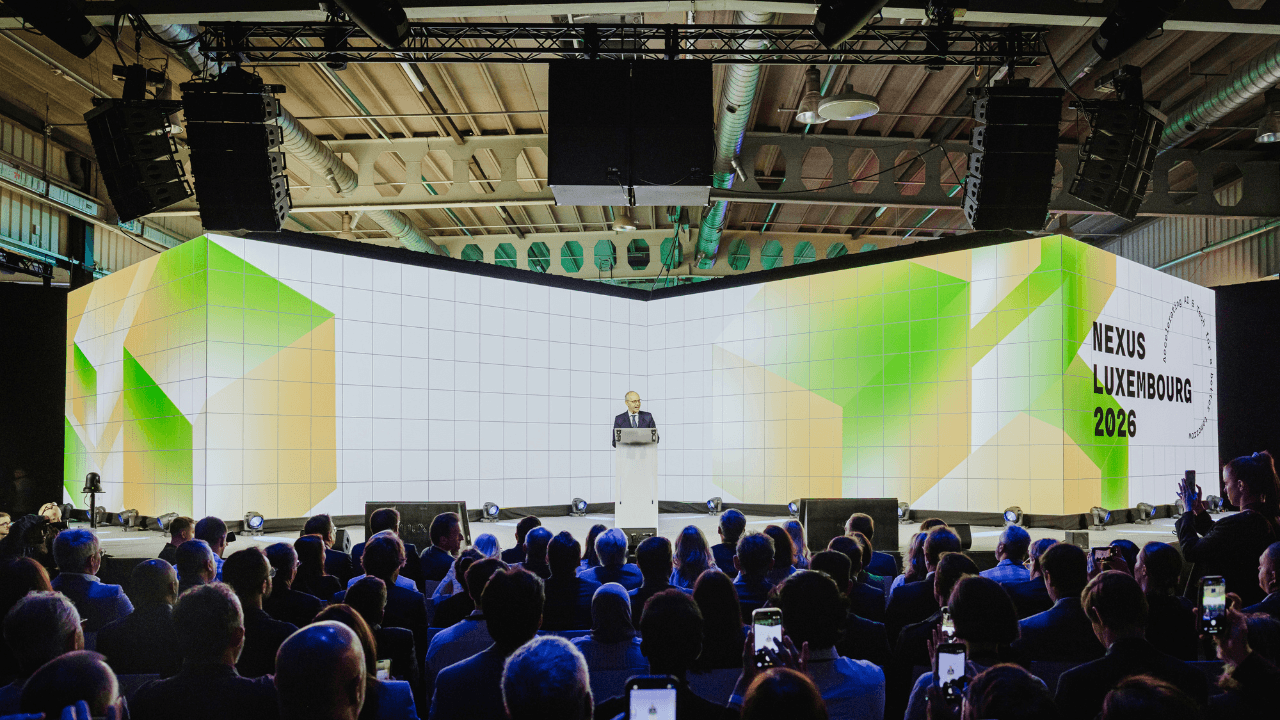
One of the best parts of my job is discovering lesser-known cities and exploring their tech and startup ecosystems. Often, it’s the places that attract the least attention that leave the biggest impression. Last week I travelled to Luxembourg for Nexus Luxembourg 2026.
I wasn’t quite sure what to expect. Despite covering European startups every day, I rarely receive pitches from Luxembourg-based companies.
But with a population of around 690,000, Luxembourg has quietly built many of the ingredients founders need to scale internationally, including access to international investors, European institutions, and a highly multilingual workforce. People from over 170 nationalities live in the country, and English, French, and German are widely used in business, making it a compelling base for startups to scale across Europe.
Further, Luxembourg is also increasingly promoting itself as a competitive innovation hub for European tech. Central to the ecosystem are investments in AI infrastructure, high-performance computing, and data centres.
Luxembourg’s flagship international summit, Nexus Luxembourg, has rapidly evolved since its founding in late 2023 into the country’s largest business, technology, and AI event.
The 2026 edition brought together more than 9,600 participants from over 80 countries — a 14 per cent increase on 2025 — uniting founders, investors, policymakers, corporates, and technology leaders. It’s a power-packed event featuring more than 675 speakers and 247 startups and scaleups pitching and competing across 12 categories.
Here are some of the key themes and companies to have on your radar:
AI sovereignty takes centre stage
If there was a single theme that dominated Nexus Luxembourg 2026, it was AI sovereignty. Speakers repeatedly returned to a central question: can Europe build a competitive AI ecosystem while reducing its dependence on foreign technology providers?
In her keynote presentation, Eva-Maria Hempe, Executive Director Public Sector EMEA at NVIDIA, highlighted the scale of Europe’s challenge.
According to Hempe, Europe accounts for less than 5 per cent of global AI compute capacity, while more than 90 per cent of frontier foundation models are developed by US companies. European organisations also spend more than €12 billion annually on hyperscale cloud infrastructure operated by American providers.
Yet Hempe argued that AI sovereignty is frequently misunderstood.
“This is about what sovereignty means in AI. The argument is that this is not a monolithic concept. Sovereignty in AI is a multi-layered concept, and we have to think through all the different layers.”
Rather than requiring complete control over every component of the AI stack, she argued that sovereignty is about understanding dependencies and making deliberate choices about where control matters most.
At the infrastructure layer, Europe is beginning to develop new options. A new generation of European cloud providers is emerging, offering greater levels of sovereignty and control, while highly sensitive sectors continue to rely on dedicated infrastructure.
“At the far end of the spectrum are fully air-gapped, on-premises deployments, which remain essential for organisations such as defence agencies and militaries that require maximum control over their data and systems.”
For Hempe, sovereignty ultimately comes down to informed trade-offs.
“The key is making an informed decision based on your priorities, balancing factors such as cost, performance, security, risk, and your own assessment of what sovereignty means in practice.”
From regulation to leadership
The sovereignty theme was reinforced by Henna Virkkunen, Executive Vice-President for Tech Sovereignty, Security and Democracy at the European Commission.
“Artificial intelligence is no longer only a technological issue, it is becoming one of the defining factors for competitiveness, productivity, security and resilience. This means AI is a question of technological sovereignty.”
She outlined Europe’s ambition to move beyond its reputation as primarily a technology regulator.
“Our objective is clear. Europe must become a place not only where AI is regulated but a place where AI is developed, manufactured, deployed and scaled.”
That call for collective ambition echoed throughout the summit. Luxembourg Prime Minister Luc Frieden framed the country’s role as part of a broader European effort.
“Luxembourg wants to be an AI platform for all of Europe. We do not think nationally, we think European. We need an AI of Europe, by Europe, for Europe.
Europe can lead if we act together. Because in this new age of AI, no country can win alone.”
Europe’s opportunity in specialised AI
While much attention has focused on competing with US frontier model developers, several speakers argued that Europe’s strongest opportunities lie elsewhere.
Olivier Debeugny, CEO of Dragon LLM, argued that Europe can succeed by building highly efficient, specialised AI systems rather than attempting to replicate the largest foundation models.
“Europe’s opportunity lies in specialised AI. We have the talent, the compute resources and the data to create smaller, highly efficient models designed for specific business needs.”
He pointed to advances in model compression, quantisation, mixture-of-experts architectures and what he described as “frugal AI.”
“We’re currently working on seven-billion-parameter models that can run natively on CPUs. There is significant innovation happening around model compression, quantisation, mixture-of-experts architectures and what I would call frugal AI.”
The growing importance of open-weight models — where trained model parameters can be downloaded, fine-tuned and deployed independently — was another recurring topic.
Such models are increasingly viewed as a pathway to greater autonomy for governments and enterprises seeking control over their infrastructure, data and AI capabilities.
This approach aligns with the view of Mario Grotz, CEO of Luxinnovation, who believes Europe can remain competitive by focusing on open models and smaller language models, areas where European companies can still effectively challenge both the US and China.
Building sovereign AI infrastructure: Luxembourg is positioning itself as a key contributor to Europe’s sovereign AI ambitions through investments in high-performance computing infrastructure. The country’s flagship supercomputer, MeluXina , launched in 2021 and operated by LuxProvide as part of the EuroHPC network, supports high-performance computing, AI workloads, data analytics and scientific research.
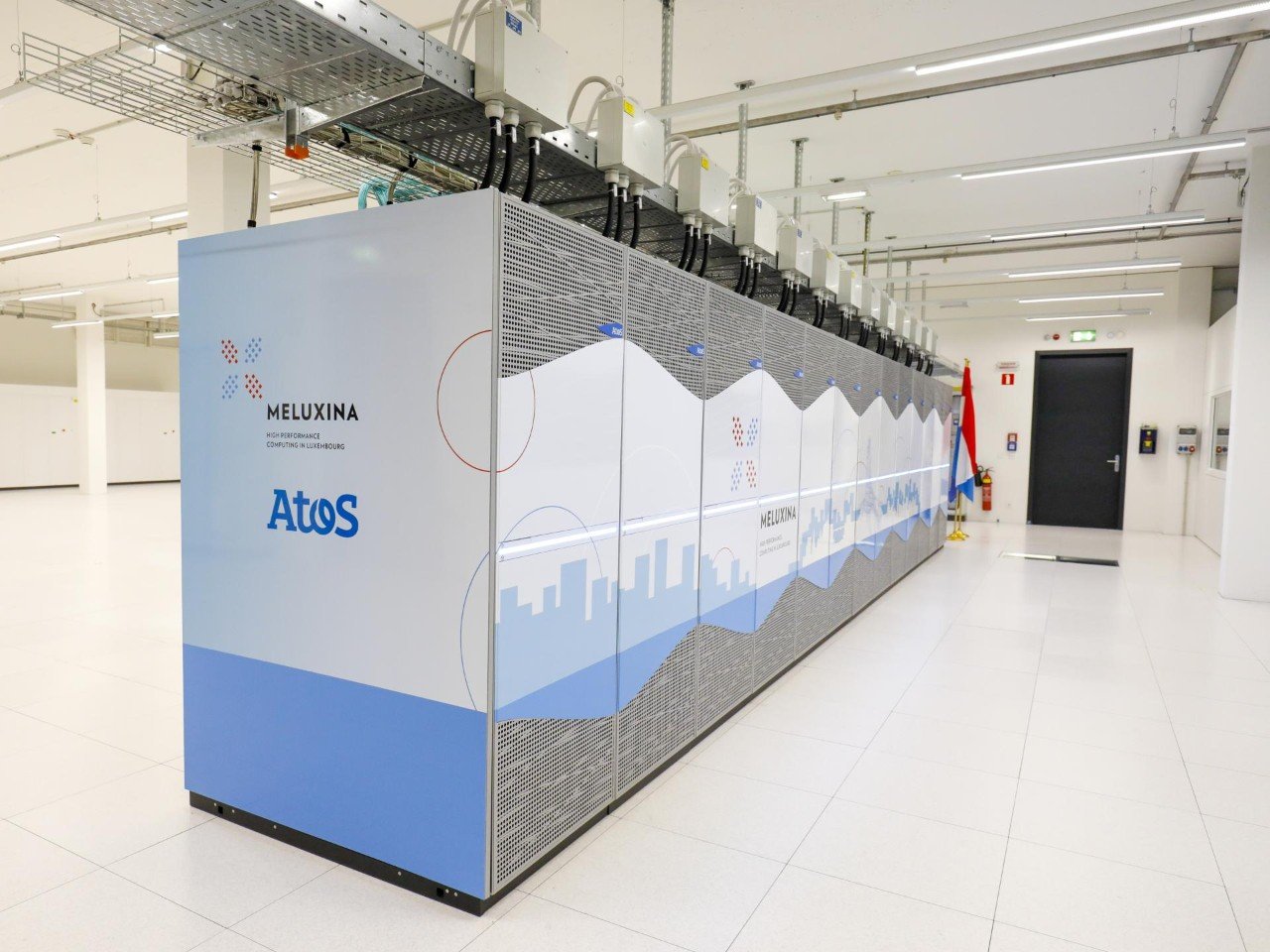
Researchers, startups, SMEs and large enterprises use the system for applications ranging from climate modelling and drug discovery to satellite optimisation and financial analysis. Luxembourg is now building MeluXina-AI, an AI-focused supercomputer that will serve as the backbone of the country’s new AI Factory initiative.
The system is expected to provide more than 2,100 GPU accelerators and support sovereign AI development across sectors including finance, cybersecurity, space and sustainability.
Creating a European AI marketplace
Alongside infrastructure investments, European policymakers are seeking to strengthen the continent’s AI ecosystem through initiatives such as the AI on Demand Platform.
According to Cécile Huet, Deputy Head of the Unit – Robotics and Artificial Intelligence Innovation and Excellence at the European Commission, the platform is designed to address one of Europe’s longstanding challenges: connecting fragmented research, innovation and commercial adoption into a unified ecosystem.
“The idea is really to create a one-stop shop for AI in Europe.”
The platform aggregates research outputs generated through EU-funded projects and makes them accessible to businesses, developers and public-sector organisations.
It also provides visibility for commercial AI solutions developed by European companies, helping potential customers discover technologies that might otherwise remain confined to national or sector-specific markets. Trust and transparency are core components of the initiative.
“It’s not only about finding AI solutions. It’s also about helping users understand whether those solutions are trustworthy and fit for purpose.”
Beyond discovery, the platform aims to accelerate adoption by helping organisations identify suitable AI tools, assess their quality and access support for implementation and scaling. Through its Business Navigator and integrated marketplace, startups and SMEs can increase their visibility, connect with potential customers and partners, and access opportunities across Europe.
Huet noted that the platform is closely connected to Europe’s network of Digital Innovation Hubs, extending its reach into regional innovation ecosystems across the continent.
“We are connected to the Digital Innovation Hubs in every European region, which helps us bring European AI solutions closer to companies and public administrations wherever they are located.”
Together, these initiatives reflect a broader shift in Europe’s AI strategy: moving beyond regulation towards building the infrastructure, ecosystems and capabilities needed to compete globally while retaining control over critical technologies.
While much of the conference focused on Europe’s AI ambitions at a strategic level, the startup competition offered a glimpse of how those ambitions are being translated into commercial ventures.
Inside the Nexus Luxembourg Startup & Scaleup Awards
A total of 247 handpicked startups and scaleups from around the world pitched their solutions live at the Launchpad Arena during Nexus Luxembourg 2026, in partnership with Wix and Start-Up Luxembourg
. The competition spanned 12 categories, with each winner receiving exclusive access to Luxembourg Venture Days, taking place on 14–15 October 2026, including a dedicated one-hour investor matchmaking session designed to connect founders with potential backers and strategic partners.
Among the standout winners was Partao, which took home the AI Applications and Solutions category. The agritech and industrial marketplace connects farmers, mechanics, workshops, and construction equipment operators with spare parts for agricultural and heavy machinery.
The company has built what it describes as Europe’s largest heavy machinery parts marketplace, providing access to more than five million OEM and aftermarket parts from over 2,000 brands, including John Deere, Fendt, New Holland, and Case IH.
By aggregating suppliers on a single platform, Partao helps customers source hard-to-find components, compare prices and availability, and streamline procurement in an industry that has traditionally been highly fragmented.
Another major winner was Exobiosphere, which secured the event’s Grand Prize. The biotech company is developing space-based drug discovery and biomedical research platforms that leverage the unique conditions of microgravity to accelerate pharmaceutical research.
Its Orbital High-Throughput Screening (OHTS) platform enables thousands of automated biological experiments to be conducted in orbit, allowing researchers to study cellular behaviour, disease progression, and potential therapies in ways that are difficult to replicate on Earth.
By combining microgravity research, advanced laboratory automation, and data analytics, Exobiosphere aims to shorten drug development timelines and improve the efficiency of biomedical research.
As Grand Prize Winner, Exobiosphere received a growth acceleration package that includes €25,000 in cash and more than €100,000 worth of services from Luxembourg-based industry experts, technology providers, and ecosystem partners.
At a side event during Nexus Luxembourg, the second edition of the Luxembourg AI Excellence Awards recognised five Luxembourg companies for innovative and impactful applications of artificial intelligence. Among the winners was CRAB Traceability Systems, a startup developing mobile AI-powered camera systems and software that help recycling operators, waste management companies, and cities analyse waste streams in real time.
Founded by researchers from the University of Luxembourg, the company uses computer vision and edge AI to identify, classify, and track materials, turning waste and recycling processes into data-driven operations. Its Mobile AI Waste Scanner can be deployed without fixed infrastructure, providing instant insights into material composition, contamination levels, litter patterns, and recycling performance.
By helping organisations measure what enters and leaves waste streams, CRAB aims to improve resource recovery, support circular economy initiatives, and make waste management more efficient and sustainable.
Luxembourg startups and scaleups to watch:
AIRMO
AIRMO is a German-Luxembourg climate and spacetech startup that helps energy companies, regulators, and investors detect and monitor methane emissions.
Founded in 2022, the company combines drones, aircraft, ground sensors, and advanced analytics to identify methane leaks, helping operators reduce emissions and comply with increasingly strict environmental regulations. The company is also developing satellite-based methane monitoring technology, using a combination of imaging sensors, LiDAR, and AI-powered analysis to detect and quantify emissions from space.
HALE-X
HALE-X is a Luxembourg healthtech startup developing AI-powered digital twins that bring together fragmented healthcare data into a single, clinically useful view of a patient. By integrating information from electronic health records, laboratory results, medical devices, imaging, genetics, and wearables, the platform helps clinicians detect risks earlier, predict complications, and make more personalised treatment decisions.
The company’s goal is to transform vast amounts of underused healthcare data into actionable insights that improve patient outcomes and support preventive care.
Founded by University of Luxembourg alumni Astou Ndiaye and Vânia Cecchini, HALE-X is initially targeting hospitals and laboratories through a clinical analytics platform while pursuing the longer-term development of regulated medical products. The startup is already working with partners including the Centre Hospitalier de Luxembourg (CHL) and is developing tools such as AI-powered blood-test interpretation and patient-specific risk prediction systems.
Selected for Luxembourg’s Fit 4 Start accelerator, HALE-X aims to build a “digital twin” for every patient, enabling healthcare providers to move from reactive treatment toward predictive, personalised medicine.
Loop-Park
Loop-Park has developed a peer-to-peer parking marketplace designed to unlock unused private parking spaces. Through its mobile app, the company connects drivers looking for parking with individuals and businesses that have empty driveways, private parking bays, or underutilised parking lots available for short-term use. By reducing the number of vehicles circulating in search of parking, the company aims to help ease congestion, lower emissions, and promote a more sustainable approach to urban mobility.
MPC Therapeutics
MPC Therapeutics is a biotechnology company developing therapies that improve the performance of cell-based treatments, particularly cancer immunotherapies such as CAR-T therapies.
The company’s core scientific focus is on mitochondria — the structures inside cells responsible for producing energy — and how manipulating cellular metabolism can rejuvenate immune cells and make them more effective at fighting disease. Its lead technology uses small molecules that reprogram cell metabolism, helping create more durable, stem-like T cells that can survive longer and remain active after infusion into patients. This approach is designed to address one of the biggest limitations of current CAR-T therapies: the tendency of therapeutic immune cells to lose effectiveness over time.
Beyond cancer immunotherapy, MPC Therapeutics is also exploring applications in neurodegenerative diseases, kidney diseases, and regenerative medicine.
MoveMe
MoveMe helps international students and professionals manage the often complex process of moving to a new country.
Using AI-powered tools and personalised checklists, MoveMe aims to reduce the stress, confusion, and time involved in international relocation. The platform centralises everything from visa and registration requirements to housing, banking, insurance, mobile services, and administrative paperwork into a single digital experience.Initially launched to support students moving to Luxembourg. It partners with various organisations including the University of Luxembourg, POST Luxembourg, Spuerkeess, and Baloise. MoveMe is a graduate of the Fit 4 Start #16.
For a country often overlooked in discussions about European innovation, Luxembourg is building an increasingly compelling case for itself. Its strategy combines investment in sovereign AI infrastructure, strong public-private collaboration, international connectivity and a growing startup ecosystem.
While Nexus Luxembourg may not yet rival Europe’s largest tech conferences in scale, it punches well above its weight in bringing together policymakers, researchers, founders and investors to discuss the future of European technology.
Nexus Luxembourg 2027 will take place on 9 and 10 March in Luxembourg City at Luxexpo. Super Early Bird tickets will be available as of next week at €85(instead of €495) until 15 September 2026. Save the dates and secure your tickets.